

EPDM ROOFING SYSTEMS
EPDM Roofing for Commercial Repairs and Replacement
EPDM is a flexible synthetic rubber membrane for low-slope commercial roofs. Tectum helps building owners evaluate EPDM repairs, maintenance and replacement in Colorado Springs and across the Front Range, with recommendations based on roof condition, drainage and long-term plans.
Home > Systems > EPDM Roofing
OVERVIEW
What Is EPDM Roofing?
EPDM stands for ethylene propylene diene monomer. This single-ply rubber roofing membrane is commonly black; white products are also available. Product options include reinforced and nonreinforced sheets, with thicknesses selected for the roof assembly.
Seams use manufacturer-approved tapes or adhesives. Adhered, mechanically attached and ballasted systems each have different requirements for the deck, insulation, wind design and roof access.
Multi-Family Property Managers
Coordinate roof repairs and replacement with tenant access, reserve planning and maintenance records. EPDM may be suitable when the proposed assembly meets the building’s requirements.
Warehouse & Distribution Owners
Review drainage, rooftop equipment, deck condition and access across the full roof area. Compare attachment options against structural capacity, wind requirements and the project scope.
Owners of Legacy Buildings
Evaluate the membrane, seams, flashings and underlying materials before planning a repair or replacement. Reusing the same membrane type still requires a review of the complete assembly.
Cold-Climate Commercial Owners
EPDM offers useful cold-weather flexibility. Select the product, attachment and insulation for the site, and follow the manufacturer’s installation requirements for temperature and weather conditions.
EPDM AT A GLANCE
EPDM System Specifications
| Specification | Detail |
|---|---|
| Membrane thickness | Specified per project for service life and Front Range conditions |
| Available thicknesses | 45-mil, 60-mil, 90-mil |
| Installation methods | Fully adhered, mechanically fastened, ballasted |
| Slope range | Low-slope (¼:12" minimum to 3":12') |
| Fire rating | Class A assemblies available when specified and when the assembly qualifies |
| Weather resistance | Excellent UV, ozone and cold-weather flexibility; not recommended for grease or chemical exposure |
| Wind uplift performance | Attachment designed to the project's wind requirements; can meet applicable FM requirements when specified |
| Typical Colorado lifespan | Long service record — maintenance-dependent |
| Warranty options | Up to 30-year NDL when the manufacturer, system and project qualify |
| Material composition | Ethylene propylene diene monomer (EPDM) synthetic rubber, black or white, reinforced or non-reinforced |
| Reflectivity (cool roof) | White EPDM available for reflectivity; black EPDM absorbs heat and aids snow melt |
KEY BENEFITS
What to Consider When Choosing EPDM
Established Commercial Use
EPDM has a long history in commercial roofing. An existing roof should be judged by its actual condition: seam adhesion, flashings, drainage, insulation moisture and repair history matter more than a generic age estimate.
Cold-Weather Flexibility
EPDM rubber remains flexible across a wide temperature range. The selected product, attachment and details still need to suit the site. Cold-weather installation must follow the manufacturer’s temperature, primer and adhesive requirements.
Maintenance and Repair Planning
Inspect seams, flashings, drains and areas affected by rooftop service traffic. Compatible repairs and planned maintenance can address localized problems. Replacement planning should consider the membrane, insulation moisture, deck condition and repair history together.
Project-Specific Costs
Installed cost depends on removal requirements, roof size, deck condition, insulation, access and the selected assembly. Compare written scopes for EPDM, TPO and PVC rather than relying on a fixed price ranking between materials.
SYSTEM SELECTION
Match EPDM to the Building and Its Condition
An EPDM recommendation should start with the building’s existing roof, use, drainage and operating needs. Climate matters, but it does not determine the membrane choice by itself.
For a replacement, review removal requirements, insulation condition and attachment options. For repairs, identify the source of the problem and whether the existing membrane and details can accept compatible repair materials.
| Building Profile | Recommended Specification |
|---|---|
| Multi-family apartments / condos / HOA | Strong fit — common spec, cost-effective |
| Warehouse / distribution (large SF) | Strong fit — ballasted EPDM is cost-effective |
| Cold-climate building (high altitude) | Strong fit — cold-weather flexibility advantage |
| Existing EPDM replacement | Strong fit — like-for-like compatibility |
| Restaurant / food service | Poor fit — specify PVC instead |
| Industrial chemical exposure | Poor fit — specify PVC instead |
| Healthcare facility | Poor fit — specify PVC for fire performance |
INSTALLATION METHODS
Three Methods to Install EPDM
Mechanically Fastened
Specified fasteners, plates or attachment strips secure the membrane as part of an approved assembly. The deck, roof zones and fastening pattern must meet the project requirements. The selected EPDM product must be approved for that attachment method.
Fully Adhered
Adhered systems bond EPDM to an approved substrate using compatible adhesive or a manufacturer-approved self-adhered product. Substrate preparation, weather and application conditions matter. Wind performance depends on the complete tested assembly.
Ballasted
A ballasted assembly uses specified stone or pavers to hold a loose-laid membrane in place. Structural capacity, roof slope, wind design, perimeter details and access must be reviewed before selecting it. Ballast also affects how the roof is inspected and repaired.
EPDM MANUFACTURER OPTIONS
Compare EPDM Product Families
Elevate, Versico and Johns Manville offer EPDM product families for commercial roofing. Compare the selected membrane, attachment details, availability and written warranty requirements with the project proposal. Product options and warranty eligibility vary by assembly.
Elevate
Certified / Approved Contractor
RubberGard EPDM
EPDM membrane
Versico
Certified / Approved Contractor
VersiGard EPDM
EPDM membrane
Johns Manville
Certified / Approved Contractor
Johns Manville EPDM
EPDM membrane
01. Is EPDM outdated?
No. EPDM has been in continuous commercial use for decades and remains a standard specification for multi-family, warehouse and cold-climate roofs. Its flexibility in low temperatures and its long track record are the reasons it continues to be specified; newer white membranes serve different priorities rather than replacing it.
02. How long does EPDM last in Colorado?
EPDM is known for long service when it is installed and maintained well, and its cold-weather flexibility suits Colorado winters. Seams, flashings and drains are where EPDM roofs typically fail first, so scheduled inspections and prompt repair are what determine whether a roof reaches its potential. Manufacturer warranty terms are the practical benchmark.
03. What's the difference between black and white EPDM?
Black EPDM is the traditional membrane: it absorbs heat, which helps with snow melt and cold-weather flexibility. White EPDM adds a reflective surface that lowers rooftop temperatures and cooling load in conditioned buildings. The choice depends on building use, energy goals and the owner’s priorities.
04. When should I specify EPDM instead of TPO?
Specify EPDM for cold-climate buildings, multi-family communities, wide-span warehouses where budget matters, and roofs where a proven, easily repaired membrane is the priority. TPO is usually preferred where a reflective white surface and heat-welded seams are wanted for a conditioned building.
05. Is ballasted EPDM still common?
Ballasted EPDM — loose-laid membrane held down with stone — is still installed where the deck can carry the weight and wind exposure allows. It is economical on wide-span roofs, but the ballast complicates inspection and leak detection. Tectum evaluates the structure and exposure before recommending it.
06. What areas does Tectum serve for EPDM roofing?
Tectum provides EPDM roofing across Colorado Springs, Pueblo, Castle Rock, Parker and Denver and the surrounding Front Range from its Colorado Springs headquarters. Tectum is licensed in all of its service areas. If your building is outside these cities, contact us — many Colorado projects are within reach.
07. Which EPDM manufacturer does Tectum primarily install?
Tectum installs EPDM from Versico, Elevate (RubberGard EPDM) and Johns Manville, and is a certified/approved contractor with each manufacturer. The manufacturer for a given project is selected for warranty goals, assembly requirements and availability.
08. Can an EPDM roof be repaired or restored instead of replaced?
Often, yes. If the membrane is sound and the problems are limited to seams, flashings, penetrations or drainage, targeted repair extends the roof’s life at a fraction of replacement cost. Restoration coatings can be an option on some EPDM roofs when the manufacturer and conditions allow. Tectum’s inspection documents which path is responsible for your roof.
RELATED SERVICES
Related Commercial Roofing Services
PVC Roofing
Chemical- and grease-resistant single-ply for restaurants, industrial and healthcare buildings, with Class A assemblies available when specified.
TPO Roofing
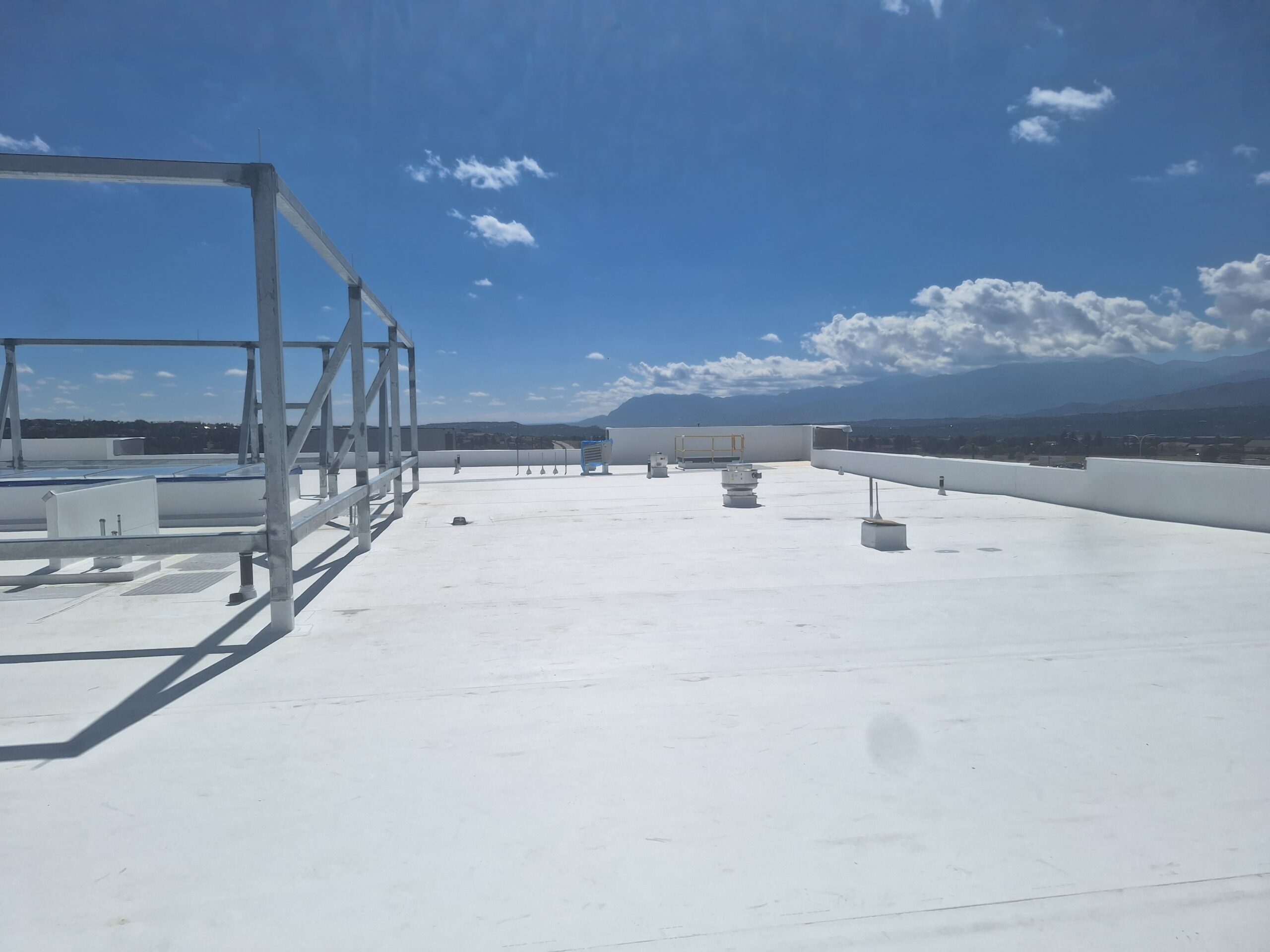
Heat-welded white single-ply membrane specified by thickness and attachment for Front Range hail, UV and wind exposure.
Roof Replacement
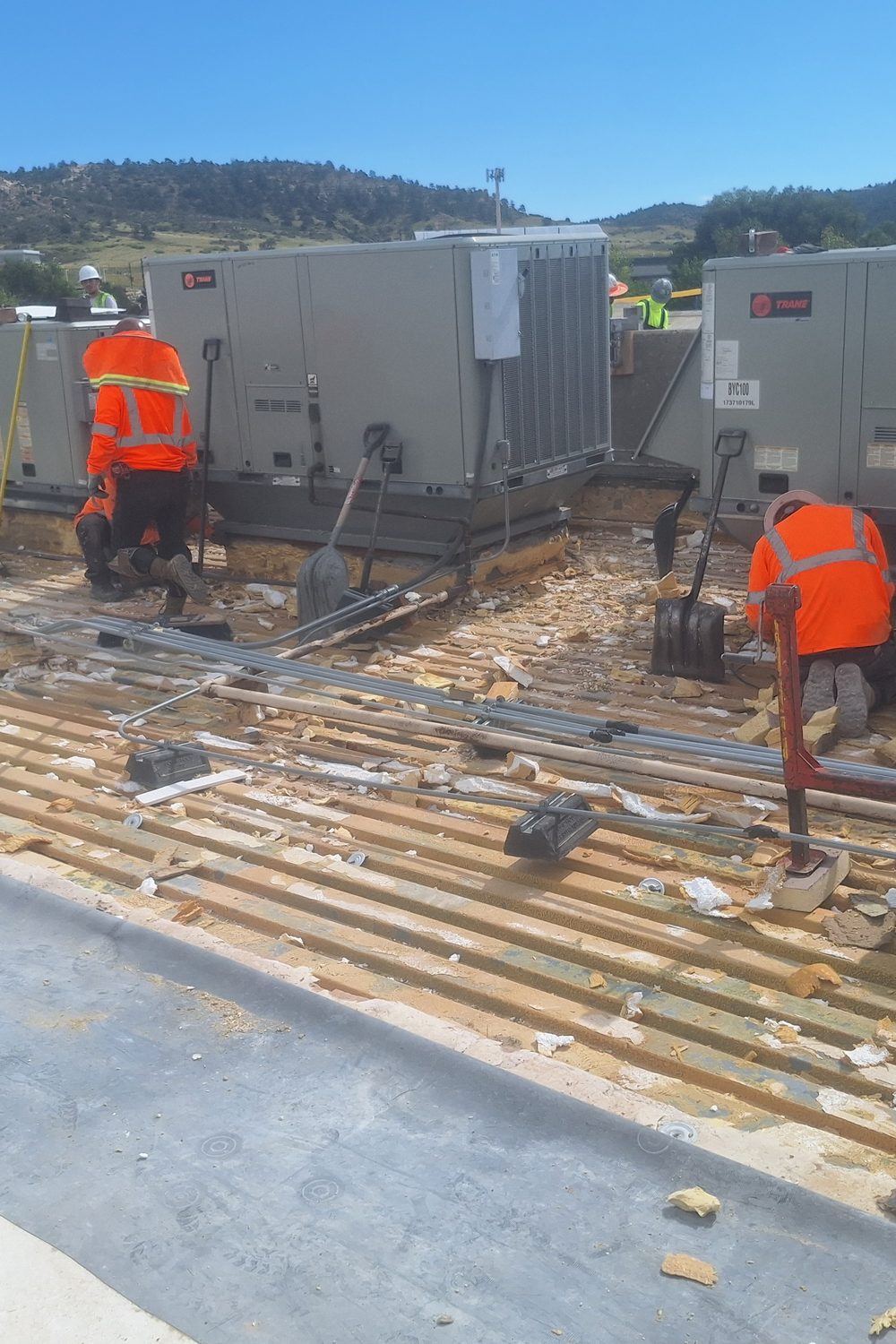
Options-based replacement of TPO, PVC, EPDM, built-up and metal roofs, phased around your operations and registered for manufacturer warranty where the project qualifies.
Roof Asset Management
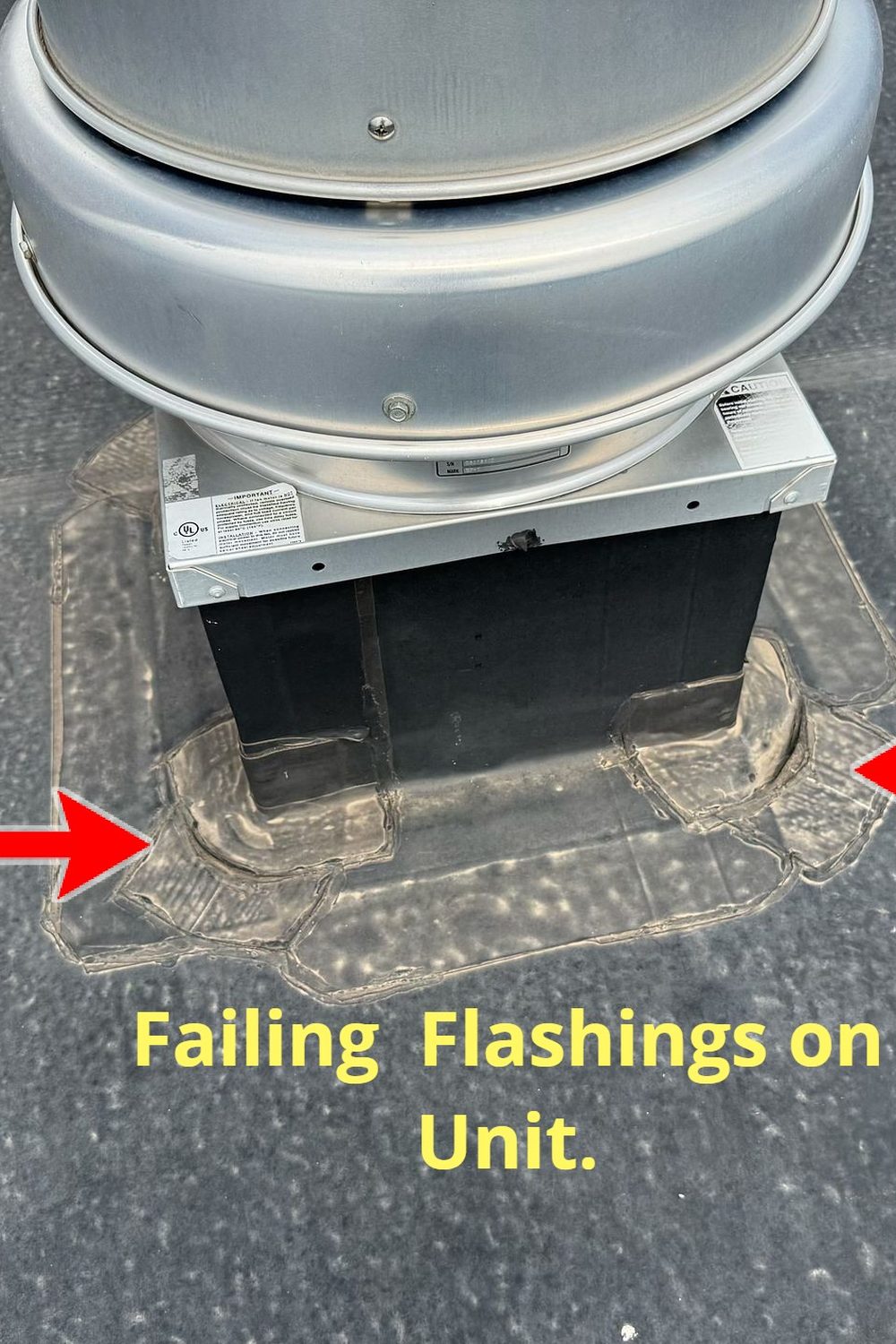
Scheduled inspections, A–F condition grading and photo reporting that keep commercial roofs performing and replacement planned, not forced.
Specifying EPDM for a multi-family, warehouse, or cold-climate property? Start with an inspection.
Tell us about leaks, roof condition, rooftop equipment and access needs. Tectum can help define the inspection information needed to plan EPDM repairs, maintenance or replacement.
Phone
(719) 455-7663