COMMERCIAL ROOFING SYSTEMS — COLORADO
The Right Commercial Roofing System Starts with the Right Inspection
Tectum installs every major commercial roof system — TPO, PVC, EPDM and metal, including standing seam and architectural panels. Tectum is a certified/approved contractor with GAF, Elevate, Duro-Last, IB Roof Systems, Versico and Johns Manville. Tectum works with Sheffield Metals, Drexel Metals, Berridge, PAC-CLAD, Alucobond and Western States. We specify the system that fits your building’s age, use, climate exposure and capital plan — not the one we have a manufacturer deal on. Serving Colorado Springs, Pueblo, Castle Rock, Parker, and Denver.
Also explore BUR and modified bitumen roofing for commercial properties.
Home > Roof Systems
WHY SYSTEM SELECTION MATTERS
Most Contractors Sell One System. Tectum Specifies the Right One.
Commercial roofing contractors typically specialize in one or two systems — usually whichever manufacturer offers them the best pricing tier. That creates a sales bias: every building gets recommended the same system regardless of fit. Tectum is a certified/approved contractor with the manufacturers behind all major commercial systems, which means specification decisions are driven by the building, not the inventory.
A 30-year-old warehouse in Pueblo with widespread membrane failure needs a different system than a new healthcare facility in Castle Rock with a tight thermal performance target. A multi-family property in Denver coming off insurance restoration faces different decisions than an industrial facility in Colorado Springs planning a 25-year capital replacement. Tectum’s manufacturer-agnostic approach means every recommendation starts with the building — what it needs, what it costs to operate, and how long the owner plans to hold it.
COMMERCIAL ROOF SYSTEMS
Four Commercial Roofing Systems Tectum Specifies
Below are the four most common commercial roof systems specified across Front Range buildings. Click any system to see specifications, ideal applications, manufacturer relationships, and Front Range performance considerations.
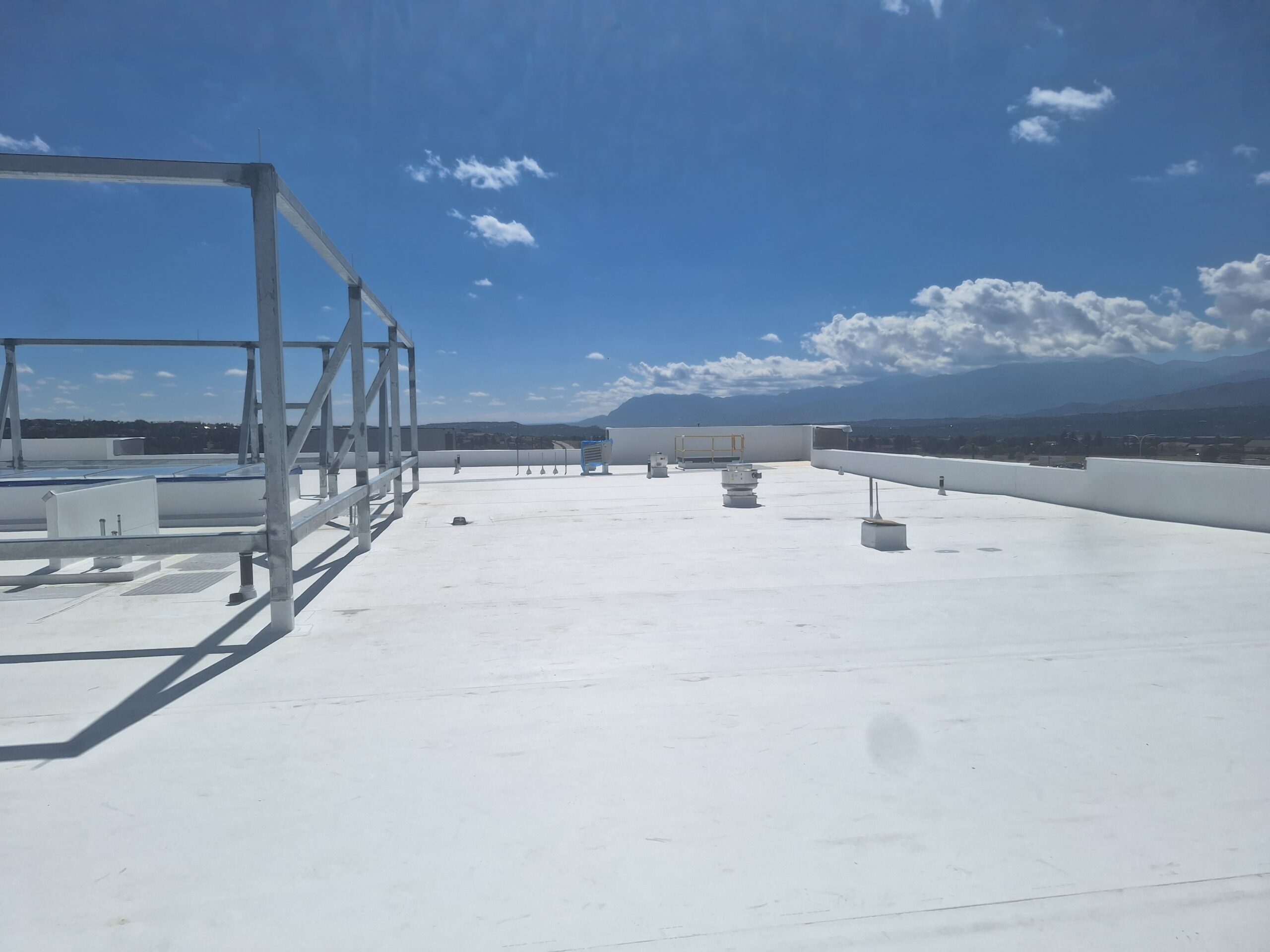
TPO Roofing
Heat-welded white single-ply membrane specified by thickness and attachment for Front Range hail, UV and wind exposure.
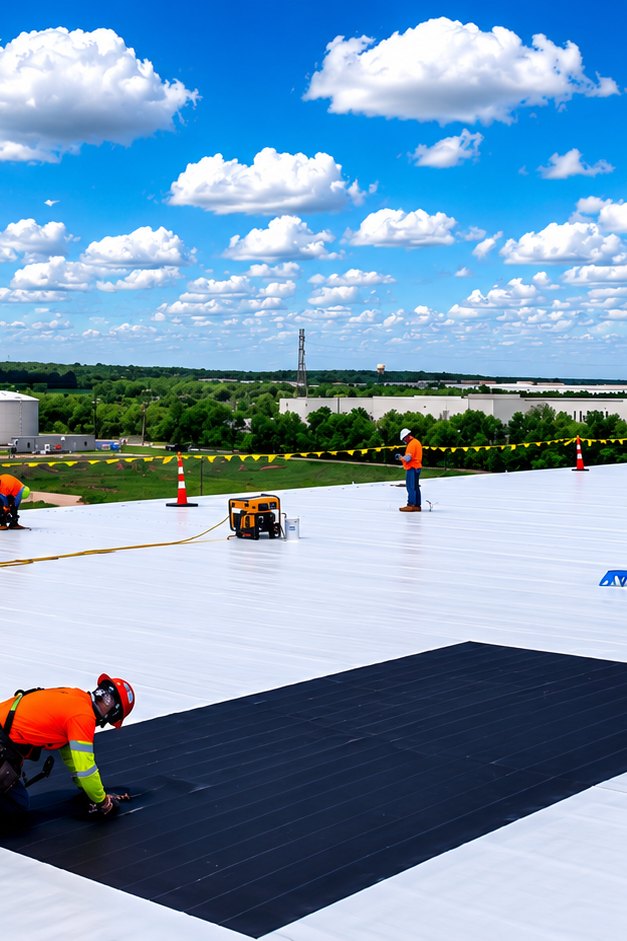
PVC Roofing
Chemical- and grease-resistant single-ply for restaurants, industrial and healthcare buildings, with Class A assemblies available when specified.
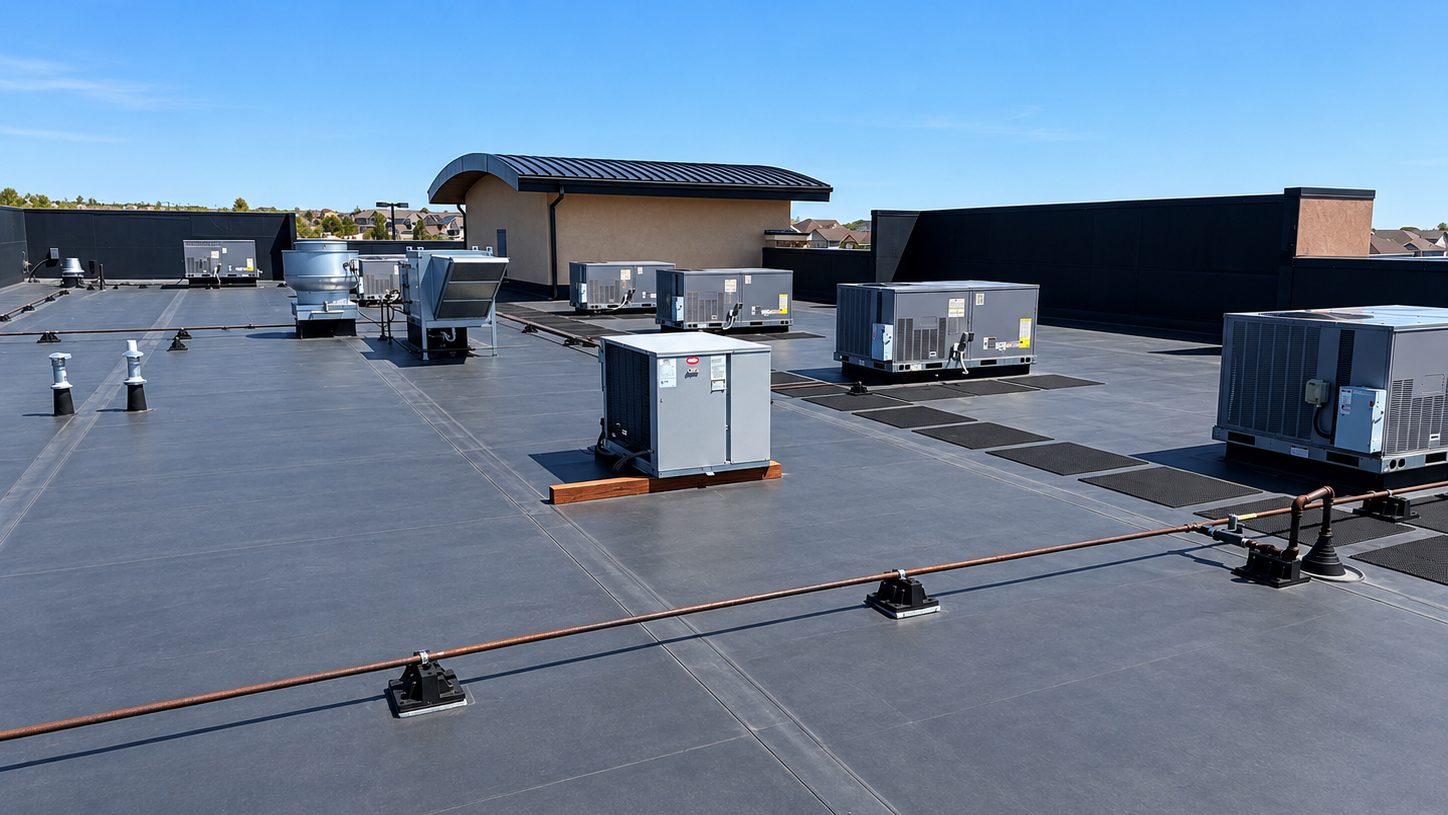
EPDM Roofing
Proven synthetic-rubber membrane for multi-family, warehouse and cold-climate roofs, installed adhered, fastened or ballasted.
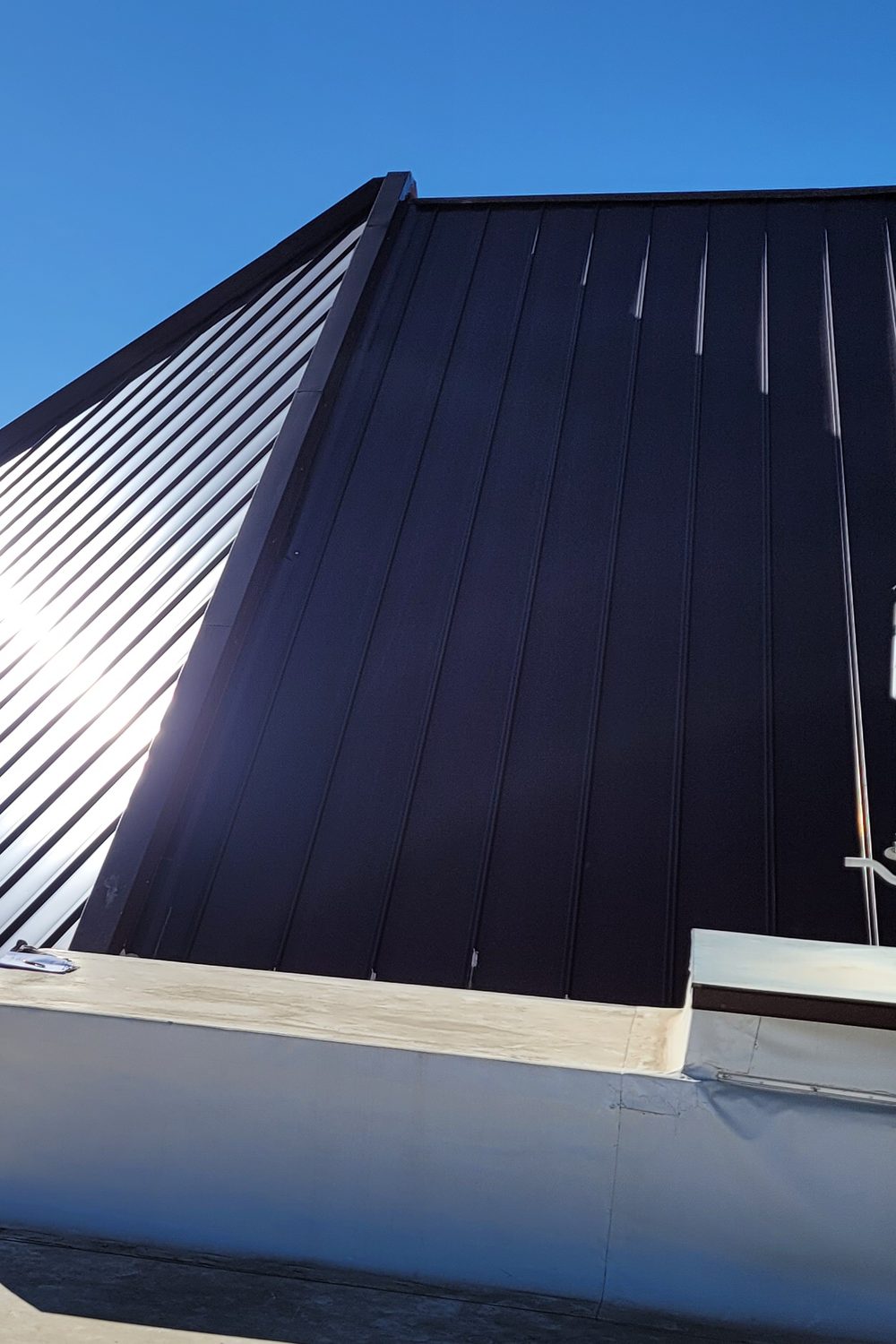
Metal Roofing
Standing seam, exposed-fastener and architectural metal panels, roll-formed in-house and specified for long ownership horizons.
TECHNICAL COMPARISON
How These 4 Commercial Roof Systems Compare
Use the matrix below to compare commercial roof systems across the dimensions that drive specification decisions. For specific Front Range performance considerations, click through to the individual system detail pages.
| Dimension | TPO | PVC | EPDM | Metal |
|---|---|---|---|---|
| Service-life planning | Review assembly, condition and maintenance | Review assembly, condition and maintenance | Review assembly, condition and maintenance | Review assembly, finish and maintenance |
| Pricing | Project-specific quote | Project-specific quote | Project-specific quote | Project-specific quote |
| UV / weathering | Review membrane specification | Review membrane specification | Review membrane specification | Review panel finish and coating |
| Hail performance | Verify tested assembly | Verify tested assembly | Verify tested assembly | Verify tested panel assembly |
| Fire rating | Class A assemblies available when specified | Class A assemblies available when specified | Class A assemblies available when specified | Class A assemblies available when specified |
| Cool roof / reflectivity | White and light-colored options | White and light-colored options | Black and white options | Varies by finish |
| Wind uplift performance | Depends on assembly and attachment | Depends on assembly and attachment | Depends on assembly and attachment | Depends on panel system and attachment |
| Chemical / grease exposure | Check membrane compatibility | Often considered; verify compatibility | Check membrane compatibility | Check coating compatibility |
| Installation methods | Mechanically fastened, fully adhered, induction welded | Mechanically fastened, fully adhered, induction welded | Mechanically fastened, fully adhered, ballasted | Standing seam and exposed-fastener systems |
| Maintenance checks | Seams, flashing and drains | Seams, flashing and drains | Seams, flashing and drains | Fasteners, seams, flashing and finish |
| Common applications | Low-slope new construction and reroofing | Low-slope buildings; some grease or chemical exposures | Low-slope reroofing and new construction | Sloped roofs and architectural applications |
SPECIFICATION METHODOLOGY
How Tectum Specifies the Right System for Your Building
System specification isn’t a sales conversation — it’s an engineering decision. Tectum follows a three-step methodology that puts the building first, the budget second, and the system third. Most contractors do it in reverse.
01
02
03
Building Assessment
Documented inspection of the existing roof, substrate, drainage pattern, slope, structural deck, and current condition. Inspector also documents building use (industrial, healthcare, multi-family, retail), occupancy patterns, rooftop equipment, and known operational constraints. This is what defines what the building actually needs.
Capital Plan Alignment
Specification is matched to the owner's capital horizon. A 40-year hold gets a different system than a 10-year hold. A REIT planning a 7-year exit gets a different recommendation than a manufacturing facility planning a multi-decade build-out. The right system is the one that aligns with how long you're keeping the asset.
System Recommendation + Options
Tectum presents 2-3 system options with side-by-side comparison — capital cost, lifecycle cost, expected service life, warranty terms, and manufacturer. You see the technical and financial implications of each option. You decide. Then we execute under manufacturer-certified installation standards.

How Tectum Specifies the Right
System for Your Building
System specification isn't a sales conversation — it's an engineering decision. Tectum follows a three-step methodology that puts the building first, the budget second, and the system third. Most contractors do it in reverse.
Building Assessment
Documented inspection of the existing roof, substrate, drainage pattern, slope, structural deck, and current condition. Inspector also documents building use industrial, healthcare, multi-family, retail, occupancy patterns, rooftop equipment, and known operational constraints. This is what defines what the building actually needs.
Capital Plan Alignment
Specification is matched to the owner's capital horizon. A 40-year hold gets a different system than a 10-year hold. A REIT planning a 7-year exit gets a different recommendation than a manufacturing facility planning a multi-decade build-out. The right system is the one that aligns with how long you're keeping the asset.
System Recommendation +
Options
Tectum presents 2–3 system options with side-by-side comparison — capital cost, lifecycle cost, expected service life, warranty terms, and manufacturer. You see the technical and financial implications of each option. You decide. Then we execute under manufacturer-certified installation standards.

KEY BENEFITS
Why Front Range Climate Drives System Selection
Hail Exposure
Hail exposure should be considered alongside the complete roof assembly, existing roof condition and the building’s requirements. Membrane type or thickness alone does not establish the roof’s performance. We review the applicable manufacturer requirements and proposed assembly when discussing options.
UV at Altitude
Colorado Springs sits at 6,035 feet. Denver at 5,280. UV intensity at altitude is significantly higher than at sea level — accelerating membrane degradation across all systems. White reflective TPO/PVC outperforms darker membranes by 5-10 years of effective service life under Front Range UV.
Freeze-Thaw Cycles
Freezing and thawing make moisture and drainage important assessment items. We inspect visible roof conditions and may recommend a moisture survey when it can help define the scope. Survey methods and timing depend on the roof system, weather and site conditions; findings are reviewed before recommending repair or replacement.
Snow Load + Wind Uplift
Colorado building code requires commercial roof systems to handle significant snow loads AND high-wind events — sometimes in the same week. Wind uplift performance varies dramatically across systems and attachment methods. Mechanically fastened systems with proper edge metal outperform ballasted systems in high-wind exposure.
MANUFACTURER RELATIONSHIPS
Certified and Approved With the Industry's Most Trusted Manufacturers
Tectum is a certified/approved contractor with GAF, Elevate, Duro-Last, IB Roof Systems, Versico and Johns Manville, and works with Sheffield Metals, Drexel Metals, Berridge, PAC-CLAD, Alucobond and Western States. Manufacturer-approved installation protects warranty status where the project qualifies.
Elevate
Certified Contractor
TPO, EPDM
GAF
Gold Elite Commercial Contractor
TPO, PVC, EPDM, Metal
Versico
Certified Contractor
TPO, PVC, EPDM
Johns Manville
Certified Contractor
TPO, PVC, EPDM
Duro-Last
Certified Contractor
PVC
IB Roof Systems
Certified Contractor
PVC
01. Which commercial roof system is best?
There is no single best system. TPO fits most general commercial buildings, PVC handles chemical, grease and restaurant exhaust exposure, EPDM suits cold-climate and multi-family applications, and metal serves long ownership horizons and steep-slope or architectural profiles. Tectum specifies the system that fits the building’s use, exposure, budget and capital plan.
02. How do TPO and PVC compare?
Both are heat-welded white single-ply membranes with reflective surfaces. PVC uses plasticized chemistry that resists grease, oils and chemical exposure, which makes it the specification for restaurants, food processing and industrial facilities. TPO typically costs less and performs well for general commercial use. Warranty availability depends on the manufacturer, system and project.
03. How long do commercial roofs last in Colorado?
Service life depends on the system, installation quality, thickness, rooftop traffic and maintenance more than on the calendar. Colorado’s hail, UV and freeze-thaw exposure shortens the life of roofs that are not inspected and maintained. Regular inspections and prompt repair of seams, flashings and drains are the biggest factors in reaching a roof’s full service life.
04. What's the difference between mechanically fastened and fully adhered?
Mechanically fastened systems attach the membrane through the insulation to the deck with plates and screws along the seams. Fully adhered systems bond the membrane to the substrate with adhesive across the entire surface. Adhered systems resist wind uplift and flutter well and give a smooth appearance; mechanically fastened systems install faster and cost less. The right choice depends on deck type, building height, wind exposure and budget.
05. Does Tectum install metal roofing on commercial buildings?
Yes. Tectum installs standing seam and exposed-fastener metal roofing, metal wall panels and ACM panels, and fabricates standing seam panels and architectural sheet metal in-house at its Colorado Springs shop. Tectum works with Sheffield Metals, Drexel Metals, Berridge, PAC-CLAD, Alucobond and Western States.
06. What areas does Tectum serve for commercial system installation?
Tectum provides commercial roof system installation across Colorado Springs, Pueblo, Castle Rock, Parker and Denver and the surrounding Front Range from its Colorado Springs headquarters. Tectum is licensed in all of its service areas. If your building is outside these cities, contact us — many Colorado projects are within reach.
07. What's the difference between TPO and PVC?
Both are heat-welded white single-ply membranes with reflective surfaces. PVC uses plasticized chemistry that resists grease, oils and chemical exposure, which makes it the specification for restaurants, food processing and industrial facilities. TPO typically costs less and performs well for general commercial use. Warranty availability depends on the manufacturer, system and project.
08. How do I choose between TPO, PVC, EPDM, and Metal?
Start with the building’s exposure: chemical or grease exhaust points to PVC; cold-climate multi-family or budget-driven wide-span roofs often suit EPDM or TPO; long ownership horizons, steep slopes and architectural intent favor metal. Then weigh warranty goals, rooftop traffic, energy performance and budget. Tectum’s inspection and specification process walks through those factors with you.
09. How long do commercial roofing systems last?
Service life depends on the system, installation quality, thickness, rooftop traffic and maintenance more than on the calendar. Colorado’s hail, UV and freeze-thaw exposure shortens the life of roofs that are not inspected and maintained. Regular inspections and prompt repair of seams, flashings and drains are the biggest factors in reaching a roof’s full service life.
10. Does Tectum repair roofs that aren't on this page (modified bitumen, built-up)?
Yes. Tectum inspects, repairs and replaces modified bitumen and built-up (BUR) roofs in addition to TPO, PVC, EPDM and metal. Repairs use materials compatible with the existing system, and when a built-up roof reaches the end of its life Tectum will specify the replacement system that fits the building.
Not sure which commercial roof system fits your building? Start with an inspection.
Every Tectum engagement begins with a documented inspection and a system recommendation matched to your building, your climate, and your capital plan.
Phone
(719) 455-7663