Table of Contents
Types of flatTypes of Flat Roofs
Unless you’ve been up on the top of a mall or movie theater, or other commercial building, you may not know what types of flat roofs materials exist and how they work. Or maybe you don’t even know what a flat roof is—but you will after today!
Flat roofs, or more appropriately named low-slope roofs, are utilized on any structure that has a slope less than 10 degrees. This is why they’re primarily used on commercial buildings, which have a very low slope or pitch, but enough to allow rainwater to flow off the roof.
Today, we’ll go over the best and most common types of flat roofs, how they work, and the pros and cons of each. This way, you can determine the best option for your commercial structure to have a long-lasting roof.
1) BUR (Built-Up Roofing)
Built-up roofing (BUR) is one of the most common types of flat roofs and works by having multiple layers of waterproof materials that protect against rain, wind, and UV rays. BUR is one of the oldest types of roofing, dating back to around the mid-1800s, and one of the first flat roof materials used in construction.
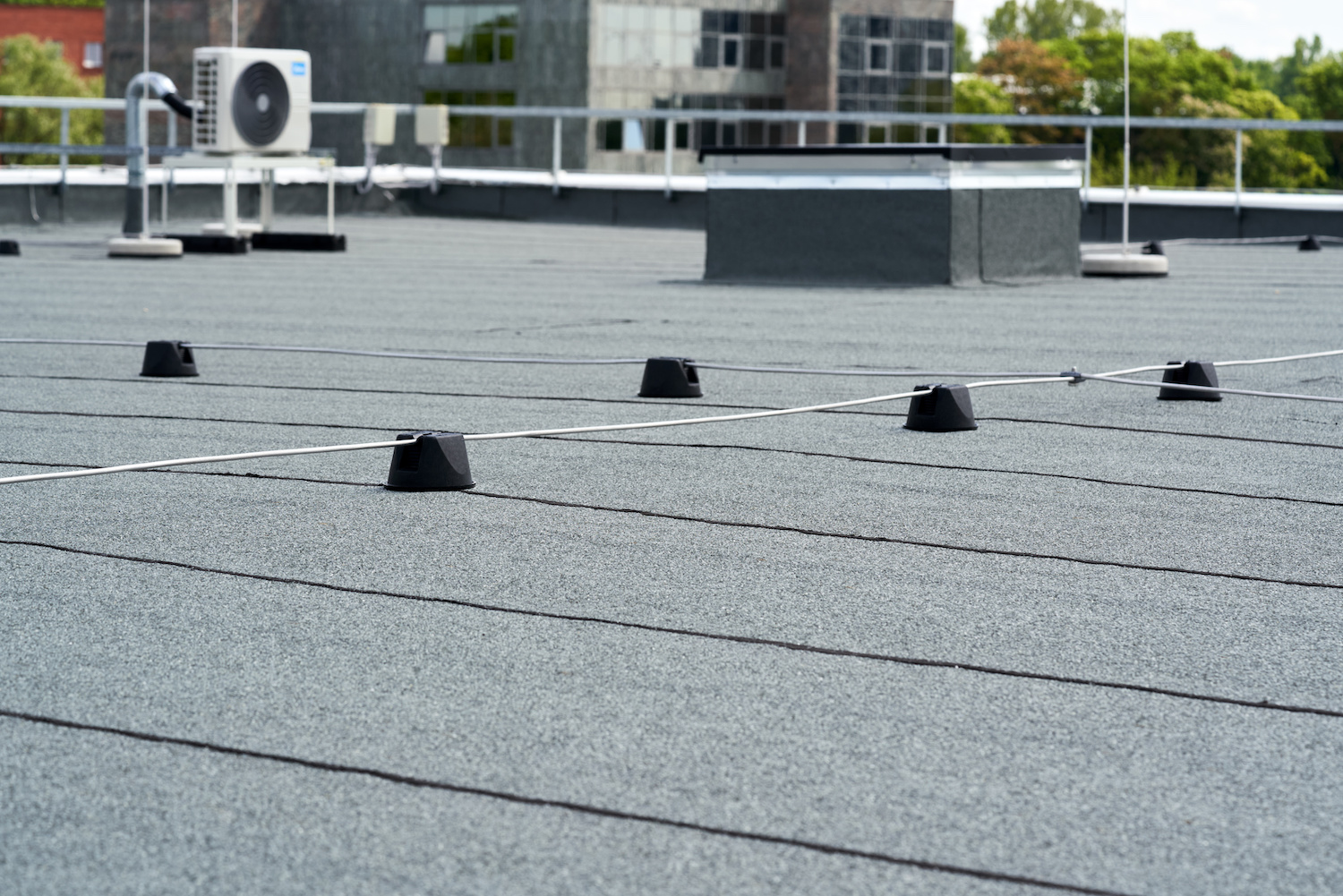
The name comes from the built-up layers that make up this type of flat roof. The order and types of layers could potentially vary based on the brand or installation technique, but in general, you can expect (from top to bottom):
- Reflective top coat
- Asphalt (granules)
- Ply sheets (3-5 layers)
- Cover board
- Asphalt
- Rigid insulation
- Roof decking
✅ BUR Pros
- Ideal for high foot traffic
- Completely seamless
- Easy to repair and replace
- 20-30 year lifespan
- Highly impact-resistant
- UV-resistant
- Fire-resistant
- Very cost-effective ($150-$250 per roof square)
❌ BUR Cons
- Potential to fade
- Protective gravel/granules can be blown off in high winds
- Difficult to locate leaks
- Heavy (may need reinforcing)
- Hazardous fumes during installation
- More vulnerable to mold growth between the layers IF water does penetrate
2) PVC (Polyvinyl Chloride)
PVC roofing is a newer type of flat roof material, dating back to the early 1990s, and is made from polyvinyl chloride (PVC) plastic. PVC roofs are popular because they’re affordable and have a long lifespan, but they’re not as durable as some other types of flat roofs.
Installation is fairly simple, as PVC roofs come in large sheets that are welded together at the seams to create a watertight seal. The sheets are then glued or mechanically fastened to the roof deck.
✅ PVC Pros
- Lightweight (easy to install)
- Seamless (fewer leaks)
- Highly reflective (cool roof)
❌ PVC Cons
- Not ideal for consistently cold climates (can get brittle and crack)
- Releases toxic fumes and carcinogens if burned and during manufacturing
- Must be installed on a completely clean, flat surface
3) EPDM (Ethylene Propylene Diene Monomer)
EPDM roofs are often called rubber roofs because that’s essentially what their material is made up of. They are quite common due to their affordability, flexibility, and numerous ways to install. EPDM is a rubber-based material that is part of a single-ply roof system and can be secured in one of three ways:
- Fully adhered using a special adhesive.
- Ballasted, which is secured by heavy stones, gravel, or rocks.
- Mechanically attached using special plates and fasteners.
✅ EPDM Pros
- Easy to install
- Lightweight material
- Can last 20-30+ years
- The most flexible flat roof material
- Very affordable ($75-$400 per square)
- Strong against wind uplift
- Easy and inexpensive repairs
❌ EPDM Cons
- Black EPDM absorbs heat and UV rays
- Not aesthetically pleasing
- Expands and contracts with temperature changes
- Has seams that risk leaking or cracking
- Certain chemicals can break down EPDM material
4) Modified Bitumen
Modified bitumen roofs are a dual-layer roofing system that uses different polymer blends mixed with asphalt to make a strong, sturdy flat roof material. Among the types of flat roofs, modified bitumen is known for its versatility. The material may be made of any combination of fiberglass, polyester, or a composite of both. And similar to EPDM roofs, can be applied in varying ways, including:
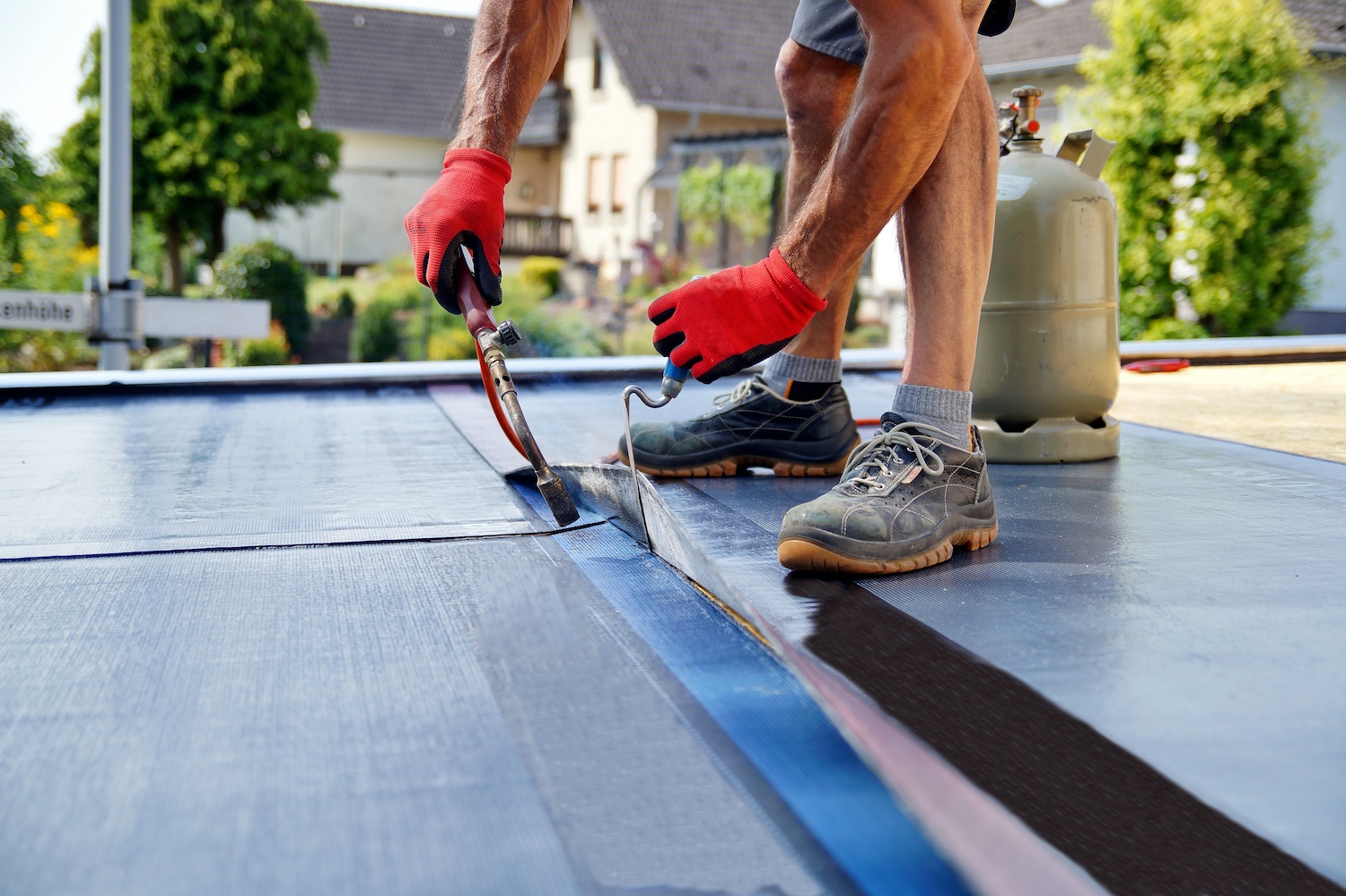
- Heat adhered: a long-handled propane torch melts the material as it’s laid, creating a watertight seal.
- Cold adhered: room-temperature bitumen is adhered which poses less fire risk and inhalation of noxious fumes that come with heat application.
- Self-adhered: a backing is peeled off, revealing a sticky backside that will fully adhere in the warm sunlight after installation. types of flat roofs for you
✅ Modified Bitumen Pros
- Many different color and style options
- Remains flexible and resists cracking even at temps as low as -22 Fahrenheit
- High fire resistance
- Safe application options (cold-adhered)
- UV resistance
- Can also work on residential flat roofs
- Recyclable material
- Easy installation
❌ Modified Bitumen Cons
- Won’t last on roofs with heavy foot traffic
- Only lasts 10-20 years
- Poor resistance to large debris or hail impact
- Risk of pooling water
5) TPO (Thermoplastic Polyolefin)
TPO roofing, or Thermoplastic Polyolefin, is one of the most common types of flat roofs used in single-ply roofing membranes. It is a similar material to PVC, but with some key differences. The main difference between TPO and PVC is that TPO doesn’t require plasticizers to make it flexible as PVC does.
✅ TPO Pros
- Easy installation and maintenance
- Is one of the more affordable flat roof options ($3.50 and $9.50 per sq. ft.)
- UV-resistant
- Energy-efficient
- Flexible color options and material
❌ TPO Cons
- Can greatly vary in quality depending on the manufacturer
- Seams leave it susceptible to leaks
- Only lasts 10-20 years
- Can crack easily, especially if walked on consistently

As you can see, there are so many types of flat roofs with great variances in quality, lifespan, and benefits—making it even more difficult to choose the best flat roof for your business. Luckily, we know the ins and outs of flat roofs and can help you make the right choice. Working with a good contractor like Tectum is key in getting a flat roof that lasts. types of flat roofs for you
Work With a Commercial Roofing Expert
Working with a reputable commercial roofing team who knows the right types of flat roofs for the job makes all the difference between a flat roof that lasts and one that needs repairs in the next few years. Tectum Roofing is a leading and trusted flat roof installer for local commercial businesses. Not only do you get the professional care to choose the best types of flat roofs for your needs, but every job is backed with industry-leading warranties that ensure your commercial structure remains leak-free for years to come. Work with the pros at Tectum—get started today. get started today.